Submit


Application and Selection of Surface Mount Common Mode Inductors in Automotive Electronics -ASIM
 2025.09.02 00:00:00
 169
169





Application and Selection Guide of Surface Mount Common Mode Inductors in Automotive Electronics
一、EMC Challenges in Automotive Electronics and the Core Value of Common Mode Inductors
1.1 Special working conditions for automotive electronics
- Temperature range:-40℃~150℃(Engine compartment)
- Vibration environment: ISO 16750-3 standard(20Hz~2000Hz)
- Voltage fluctuation: ISO 7637-2 load pulse (100V/400ms)
1.2 The core function of common mode inductors
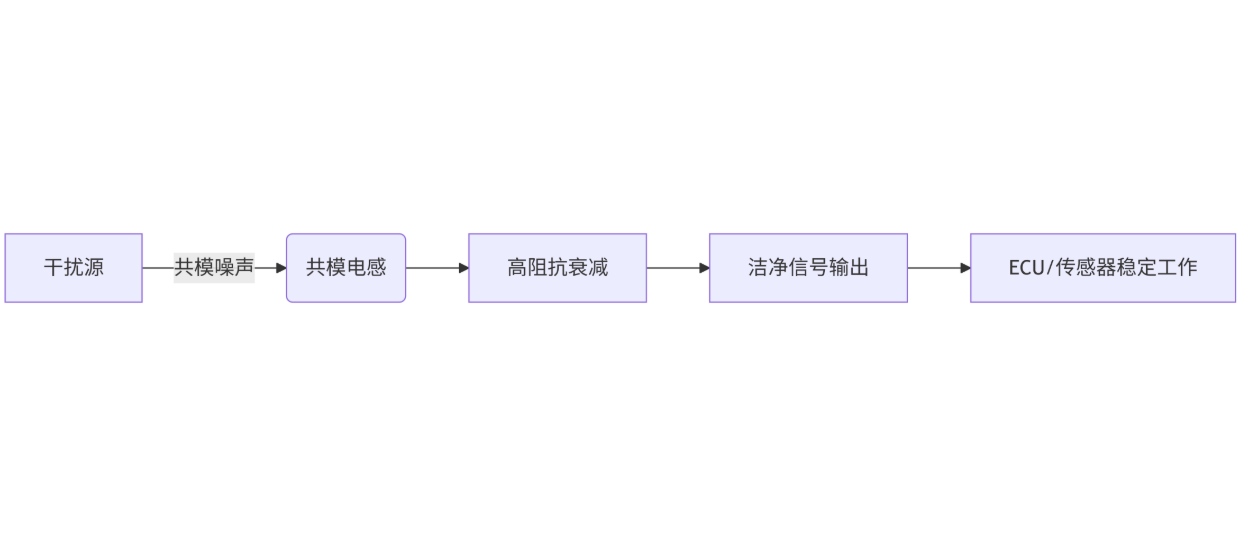
1.3 Failure risk avoidance
- A CAN bus bit error rate greater than 10⁻⁶ will trigger the safety mechanism
- The signal-to-noise ratio of the camera signal < 40dB causes the ADAS to fail
- The bit error rate of 100-megabit Ethernet should be less than 10⁻¹²
二、Analysis of Key Selection parameters
2.1 Electrical performance matrix
Rated currentInsulation resistance
| Parameter | Standard requirements | Test conditions | Failure risk |
|---|---|---|---|
| Common-mode impedance(Zcm) | 100MHz≥600Ω | -40℃~150℃ Temperature cycle | High-speed bus signal attenuation>3dB |
| Direct current resistance(DCR) | ≤500mΩ@125℃ | 20A Dc superposition | Power cord temperature rise >15℃ |
| Three times the working current margin | ISO 16750 Transient Pulse Test | Core saturation leads to filter failure | |
| ≥100MΩ@500VDC | 85℃/85%RH 1000h | The leakage current in the high-voltage system exceeds the standard |
2.2 Structural characteristic requirements
- Core material: NiZn ferrite (high frequency) vs MnZn ferrite (high current)
- Winding process: Triple insulated wire (enhanced insulation)
- Package grade: IP6K - 9K dust and water resistance (chassis area)
三、Typical application scenario selection scheme
3.1 Power control system
- Motor drive wire:
- Rated current ≥30A (PHEV drive motor)
- 200℃ high-temperature magnetic core material
- 10kV isolation withstand voltage (IGBT switch noise protection)
3.2 Intelligent cockpit system
| Subsystem | Recommended parameters | Special requirements |
|---|---|---|
| Display screen LVDS | Zcm@500MHz=90Ω±10% | <0.5dB Insertion loss |
| Audio system | DCR≤50mΩ | THD+N<0.01%@2Vrms |
| USB-C Fast charging | 100W Power support | 100MHz~1GHz Full-band suppression |
四、The Golden Rule for Selection
4.1 Parameter matching formula
- Impedance calculation:Zcm_min = 20log₁₀(Vnoise/Vallow) + 10dB(Margin)
- Current margin:Irated ≥ 3 × Ioperating_max
- Temperature derating:150℃ The increase in DCR ≤30%
4.2 List of Certification Standards
- AEC-Q200 Rev D(Passive components for automotive use)
- ISO 11452-4(Inject a large current into immunity)
IEC 62133-2(Battery system safety)
五、Key points of design and installation
5.1 PCB layout specification
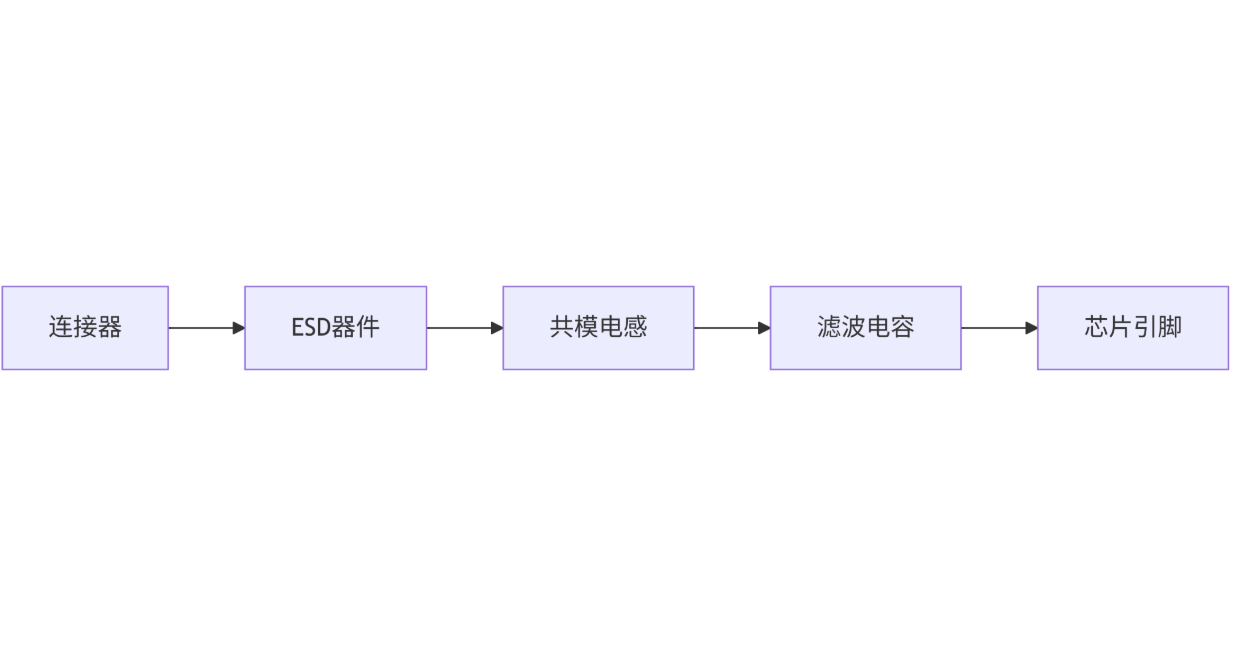
- Spacing requirements:
- Distance connector≤15mm
- Differential pair trace length difference<5mil
- Crossing the dividing plane is prohibited
5.2 Welding process parameters
| Process type | Peak temperature | Duration | Special requirements |
|---|---|---|---|
| Reflow soldering | 260℃±5℃ | <10s | N₂ Protect against oxidation |
| Wave soldering | 245℃±5℃ | 5s±1s | Preheating gradient ≤3℃/s |
六、Future technological trends
6.1 Integrated solution
- Common mode inductor +TVS two-in-one module (saving 40% layout space)
- Intelligent inductor: Built-in temperature/current monitoring (supports OTA diagnosis)
6.2 Breakthrough in New Materials
- Nanocrystalline strip: Impedance increased by 50%@150℃
- Low-temperature co-fired ceramics: Supports 10GHz millimeter-wave applications
6.3 Simulation-driven design
- ANSYS SIwave: Accurately Predict insertion loss
- CST Studio: 3D Electromagnetic Coupling Analysis
Industry data: By 2025, the number of common mode inductors used per smart electric vehicle will exceed 32 (a 300% increase compared to 2022), and EMC faults caused by selection errors will account for 38% of the vehicle's electronic faults. Mastering the scientific selection methodology has become the core competitiveness of automotive electronics engineers.
 Previous