Submit






Tiny ESD diode packages rarely carry the full ordering code. A two- or three-character top mark may identify a device family only when it is combined with the manufacturer, package, reel label, lot code, and controlled marking table. If the original packaging is missing, visual similarity is not sufficient for production release. Quarantine the material and rebuild its identity from records and electrical evidence.
The top mark is a clue, not a complete identity
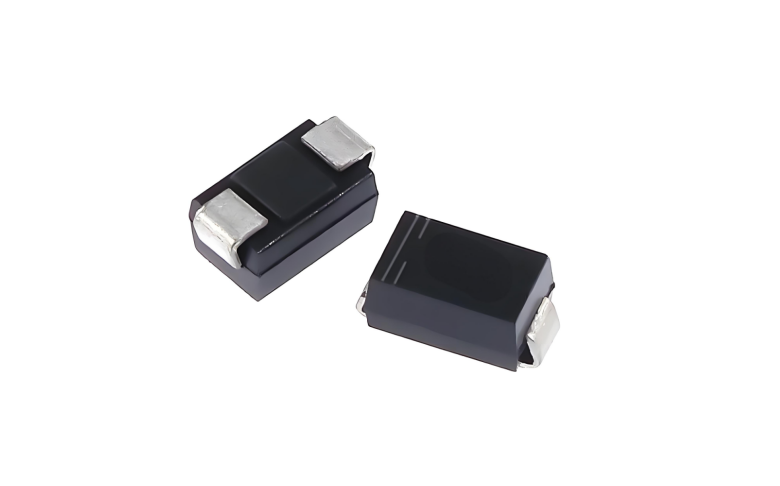
DFN, SOD, and wafer-level packages have very little printable area. The visible code may be abbreviated, rotated, split across lines, or shared by several voltage options. A dot or chamfer may indicate pin 1 rather than product type. Laser contrast also changes with molding compound and lighting, so one photograph can hide a character that is visible under another angle.
This is why an engineer should not type a short code into a search engine and select the first matching result. Marking codes are not globally unique. Two unrelated manufacturers can use the same letters, and one manufacturer may revise a marking scheme over time. The safe identification unit is a chain of evidence, not the characters on the package alone.
Preserve the packaging before opening more material
When an unknown reel reaches incoming inspection, stop normal consumption and preserve what remains. The outer box, moisture barrier bag, reel label, leader tape, splice, desiccant, and purchase paperwork may contain more information than the component surface.
Capture these items in a single inspection record:
supplier name and purchase-order line;
manufacturer name and full ordering code printed on the label;
lot, date, wafer, assembly, or trace codes that are present;
quantity, reel diameter, tape width, pocket orientation, and pin-1 direction;
package outline, body dimensions, terminal pattern, and top-mark orientation;
photographs under consistent magnification and lighting;
datasheet revision and marking table used for comparison.
Do not peel labels away or mix loose samples from different bags. If the material later enters a failure investigation, preservation of the original grouping can determine whether the issue is confined to one lot or is a broader identification error.
Compare the package before measuring the silicon
Package checks can reject many false matches without applying electrical stress. Measure body length, width, height, lead or pad geometry, exposed pad, pin count, and tape orientation. A four-line ESD array and a single-line diode may share an external package size while using different pin functions. Installing the wrong topology can short a data pair or leave one line unprotected.
Inspect the board footprint as well. A device that physically sits on the pads may still have a different ground or rail pin. For flow-through arrays, lane order and pin symmetry affect routing. Compare the suspected part with a known-good retained sample using the same microscope settings, but treat visual agreement as supporting evidence rather than final proof.
Build an electrical fingerprint without destroying the sample
If documentation narrows the possibilities, controlled electrical measurements can test whether the candidate behaves as expected. Start with low-energy methods and observe polarity. Depending on the topology and available equipment, the team may compare:
diode conduction paths and bidirectional or unidirectional behavior;
reverse leakage at safe voltages below the suspected working limit;
breakdown behavior using a current-limited curve tracer;
junction capacitance under a stated frequency and bias;
continuity and isolation between channels;
results against a traceable known-good part from the same ordering code.
One matching number is not enough. A low-voltage signal diode can resemble an ESD protector in a simple diode-mode check, while having a very different pulse capability and capacitance. Do not fire high-energy ESD or surge pulses merely to identify an unknown reel; that can damage samples and still fail to establish their production origin.
Use a quarantine decision tree
An incoming-quality team can handle the event in a repeatable order:
Stop issue and segregate every reel or bag linked to the questionable shipment.
Link physical material to the purchase order, delivery note, and approved supplier.
Ask the supplier for the original manufacturer label and a marking declaration for the exact ordering code.
Compare package dimensions, tape orientation, topology, and marking format with controlled documents.
Run non-destructive electrical comparison against retained approved material.
Escalate unresolved differences to the manufacturer or a qualified analysis laboratory.
Release, return, or scrap the material only after the disposition is documented.
This flow is slower than guessing from a photograph but much faster than tracing intermittent field failures caused by mixed parts. It also stops a local inspection decision from becoming an undocumented change to the AVL.
Samples are only useful when their identity survives testing
Evaluation samples often arrive in small cut tape, which makes label loss more likely. Give each strip a sample ID and photograph its source label before the components move to the lab. The test report should record the complete ordering code, lot information, quantity, board revision, placement reference, and datasheet revision.
After signal-integrity and ESD testing, keep at least one untested control sample when project rules permit. If later measurements look unusual, the control provides a direct comparison. A spreadsheet cell containing only “5 V ESD” cannot support a production decision months later.
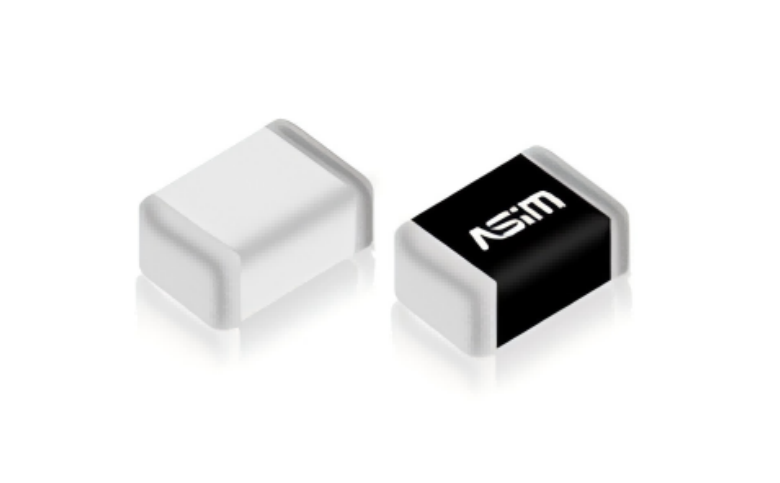
ASIM technical support can confirm the marking and package information for ASIM parts when the full label and clear photographs are available. For devices such as multi-channel low-capacitance arrays, the full ordering code matters because working voltage, channel arrangement, and package can differ while the bodies look nearly identical.
Prevent the problem at receiving and repacking
The durable fix is procedural. Approved suppliers should be required to preserve manufacturer labels and provide traceable packing information. Internal warehouses should copy the complete identity to every split reel, dry pack, or kit. Operators should scan a controlled part number rather than manually shortening it.
Repacking instructions should define which labels must remain with the material and how partial quantities inherit lot traceability. If multiple lots are combined for convenience, the system loses the ability to isolate a problem. Keep them separate unless the quality process explicitly manages the merge.
Do not publish certainty that the evidence cannot support
Sometimes the only remaining evidence is a tray of loose devices with similar markings. In that case, the technically honest conclusion may be “electrically consistent with candidate X, origin not verified.” That material can be useful for destructive analysis or internal experiments, but it should not silently return to customer production.
An incomplete top mark is manageable when the organization keeps labels, records, controlled documents, and retained samples connected. Once those links are broken, extra measurements can reduce uncertainty but cannot recreate supply-chain provenance.
ESD Diode Marking FAQ
Can an ESD diode be identified from its top mark alone?
Usually no. Combine the mark with manufacturer, package, reel label, lot data, pin orientation, marking documentation, and electrical comparison.
What should I do if the reel label is missing?
Quarantine the material, trace the purchase and packing records, compare it with approved retained samples, and obtain written identification evidence before production release.
Is a diode-mode multimeter test enough to approve the part?
No. It can reveal basic conduction paths, but it does not establish working voltage, capacitance, clamping performance, pulse capability, qualification, or origin.
Copyright notice:Copyright belongs to Shenzhen ASIM Electronics Co., Ltd. Please retain the author, source, and original URL when quoting or republishing.
Original URL: https://asim.com.cn/identify-esd-diode-incomplete-package-marking-en.html
 Previous