Submit






On August 24, 2026, China’s Ministry of Industry and Information Technology released a consultation draft for a national humanoid robot standards framework. The draft names perception, communications, connections, reliability, and electromagnetic compatibility as standardization areas, bringing high-speed interface immunity and post-stress evidence into sharper focus.
What the consultation draft says, and what it does not say
The official MIIT consultation notice organizes the proposed standard system into six areas: common foundations, key technologies, complete robots, applications, safety, and ethics. Within key technologies, its scope reaches perception, communications, connections, limbs, testing, reliability, and electromagnetic compatibility. The document is a planning guide under public consultation, not a final product certification rule.
That distinction sets the editorial and engineering boundary. A component supplier cannot claim that the draft requires one ESD diode model. A robot manufacturer cannot use a device-level ESD rating as proof of compliance with standards that have not yet been finalized. The useful preparation is to make interface conditions, test methods, lots, and post-stress performance easier to audit.
The draft’s direction matters because humanoid robots combine dense sensing, high-speed communications, actuators, exposed connectors, moving cables, and multiple ground structures. Static discharge can reach those functions through a direct contact point, a cable shield, a frame, a service connector, or capacitive coupling.
Perception modules need more than a withstand-voltage claim
Cameras, encoders, force sensors, and tactile arrays do not share one electrical environment. A short internal image-sensor link has different bandwidth and exposure from an external service port. A bridge sensor can remain powered after a discharge yet develop an offset that changes the control result.
An ESD protection data package for a perception interface should identify:
Signal rate, amplitude, channel count, and permitted capacitive loading.
Normal, startup, hot-plug, and fault voltage states.
Connector, cable, enclosure opening, and reference-ground arrangement.
Contact and air discharge locations, polarities, repetitions, and levels.
Operating mode and the function monitored during stress.
Post-stress offset, noise, frame errors, leakage, calibration, and permanent damage.
A pass/fail record based only on whether the robot restarted can miss a degraded sensor. The acceptance criterion should reflect what the module contributes to control, such as data validity, error count, recovery time, and calibration retention.
Communication and connection modules turn PCB details into evidence
The consultation draft addresses wired and wireless communications as well as connectors, cables, and printed circuit boards. At product level, Ethernet, CAN, USB, camera links, debug ports, and internal harnesses each need an interface-specific protection record. Wireless equipment still has power, debug, antenna, and enclosure coupling paths even when no external data cable is present.
A link-focused validation can use this order:
Measure the unprotected or reference channel to establish signal margin.
Add the candidate ESD device and repeat insertion-loss, eye, or error testing.
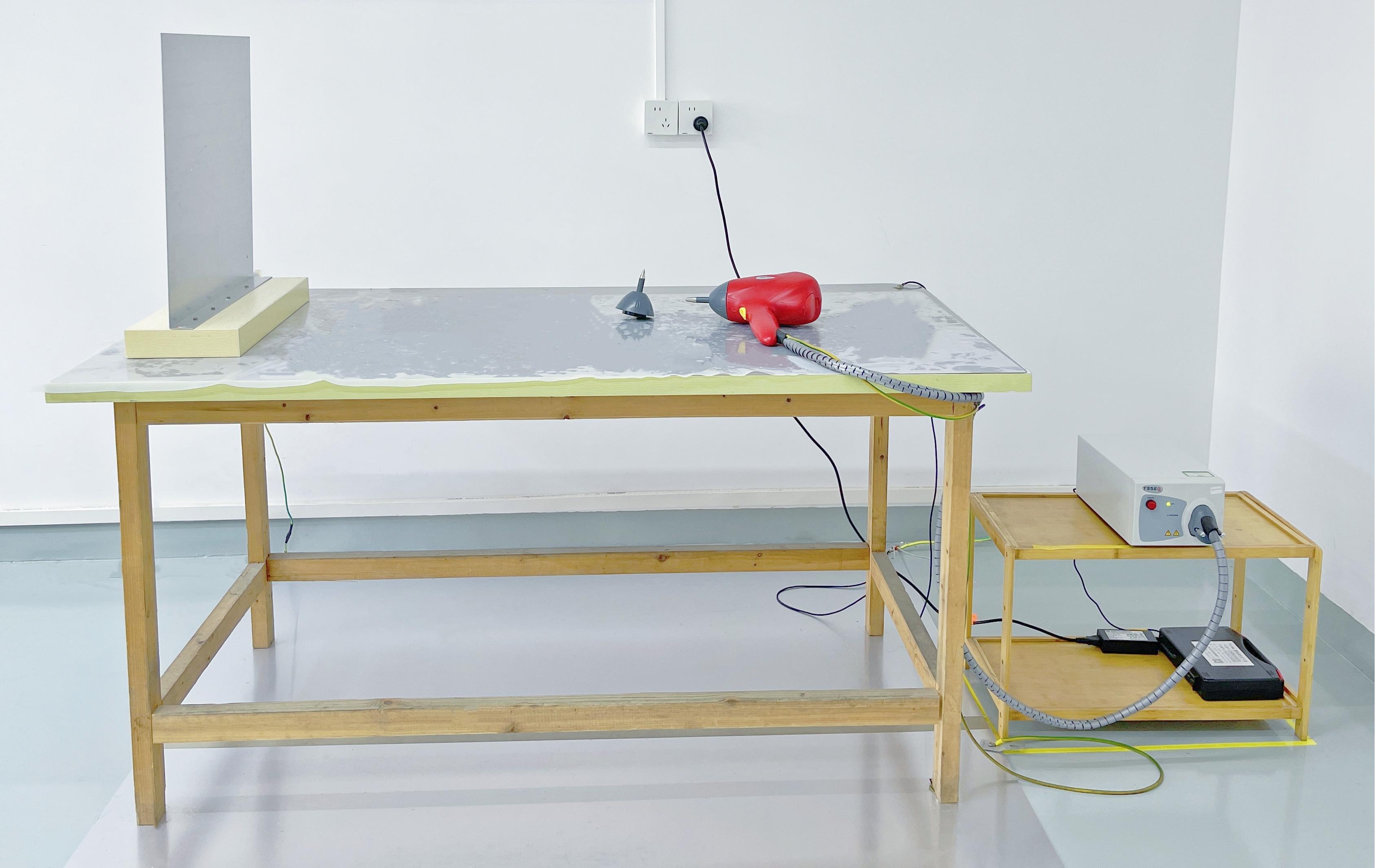
Apply ESD with representative connectors, cables, enclosure, and grounding.
Monitor link interruption, error counters, reset state, and recovery time.
Repeat channel and leakage measurements after stress.
Preserve the PCB revision, firmware, device code, and sample lot.
The sequence separates two statements that are often confused: the protection device did not suffer a hard short, and the communication system continued to satisfy its function. Both may be required, but they are not the same result.
A supplier needs evidence modules, not a generic robot parts list
A catalog list headed “ESD diodes for robots” does little to narrow a design. A useful manufacturer package includes parameter definitions with conditions, dynamic clamping or TLP information, high-speed signal data, package and layout guidance, lot identification, and change-control terms. When a program requires an automotive or industrial qualification, the supplier should map that request to the exact orderable code and current document.
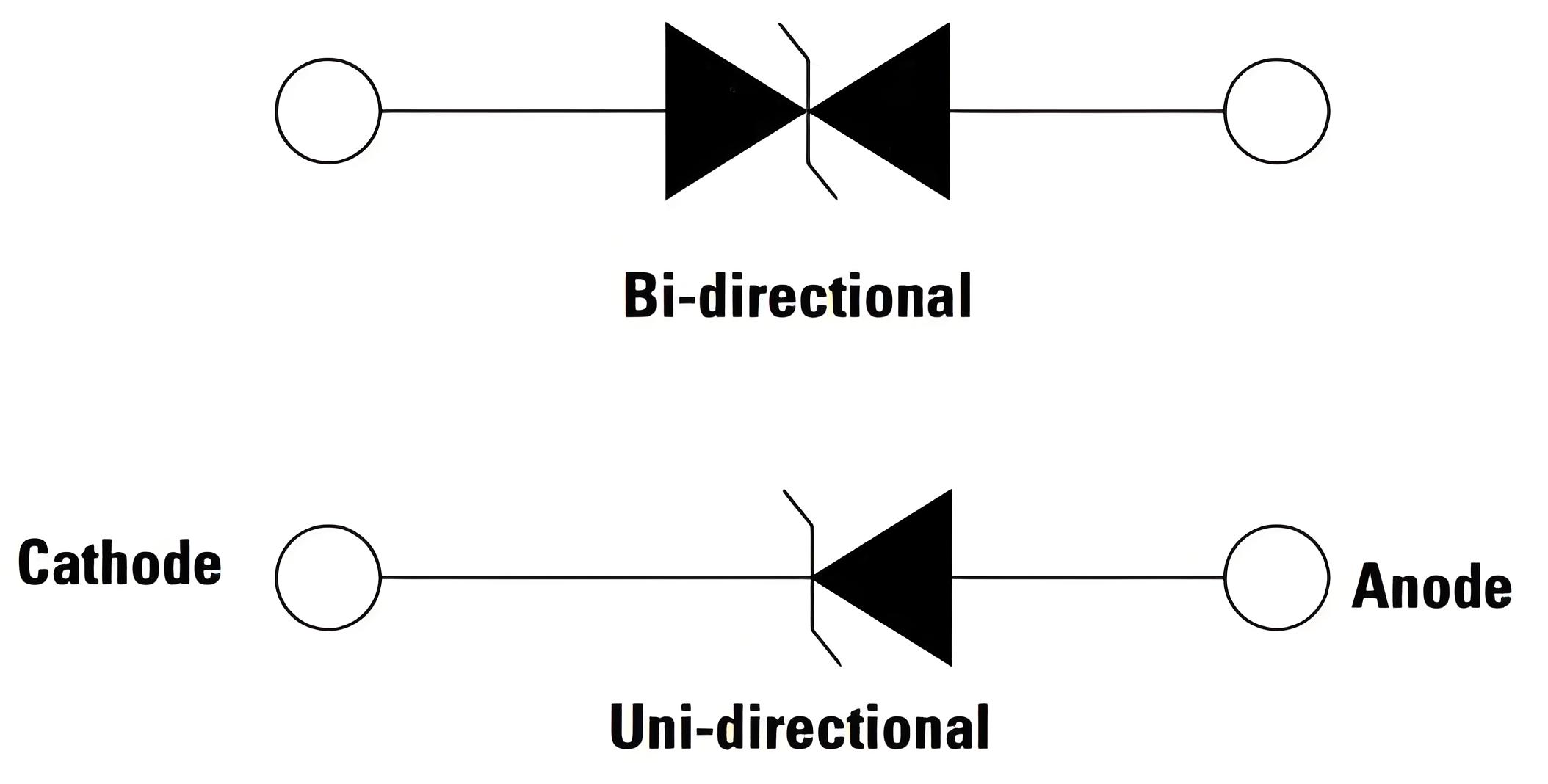
ASIM ESD3V3X004SA and ESD5X004SA are examples of bidirectional four-channel arrays in DFN2010-5L. Both list 0.25 pF typical junction capacitance, while their VRWM grades are 3.3 V and 5 V. These facts support an initial screen for a compact multi-line interface. They do not select the device for a robot without the signal voltage, PCB, protected IC limit, and system ESD target.
Power, actuator, and long-cable entries can carry more transient energy than a short internal sensor trace. Those nodes may need coordinated TVS protection, current limiting, filtering, shielding, and grounding. The ESD diode supplier should ask for the waveform and return path instead of proposing one component for every entry point.
Moving structures create test states that bench boards miss
Humanoid robots change cable shape, connector stress, contact with the floor, and proximity between metal structures as they move. A test plan should identify positions that alter cable routing or grounding. A failure that appears only with an arm extended or a harness bent may reflect coupling and reference-path changes rather than a random software event.
Useful operating-state coverage includes:
Powered but stationary, with all communication links active.
Motion sequences that exercise actuators and high-current switching.
Charging, docking, maintenance, and hot-plug states.
Representative accessories, harness lengths, and external equipment.
High and low supply boundaries and temperature conditions required by the program.
Start at a controlled lower stress to locate sensitive paths, then run the applicable final level and repetition plan. Every temporary foil, ferrite, ground strap, or software recovery change must enter the hardware or configuration record before a result is called repeatable.
Turn a policy headline into durable engineering content
News traffic fades, while a well-structured interface record stays useful. Robot developers can create one form that captures voltage, bandwidth, cable, connector, discharge point, function criterion, sample lot, and recovery behavior. Component suppliers can respond with condition-specific data instead of a claim that a part is universally suitable for humanoid robots.
The ASIM ESD diode manufacturer hub groups supplier and application information for further evaluation. When final standards or customer requirements are available, map each clause to a test item and record the applicable version. Do not backfill a future compliance claim into a consultation document.
The strongest preparation for the emerging robot standards landscape is a reproducible evidence chain. It connects the physical entry point to the coupling path, protected circuit, monitored function, device lot, and post-stress result. That chain helps engineers diagnose real failures and gives procurement and quality teams a record they can review.
Humanoid Robot ESD Protection Questions
Does the 2026 consultation draft require a specific ESD diode?
No. It describes a proposed standards framework and does not name a component brand or model. Selection remains interface- and program-specific.
Is a device-level ESD rating enough for a robot module?
No. The module and complete product must be evaluated with their connector, cable, PCB, grounding, operating state, and functional criteria.
Why measure sensor offset after an ESD test?
A sensor may avoid permanent shutdown but develop noise, offset, lost frames, or calibration drift that still affects robot control.
Copyright notice:Copyright belongs to Shenzhen ASIM Electronics Co., Ltd. Please retain the author, source, and original URL when quoting or republishing.
Original URL: https://asim.com.cn/humanoid-robot-esd-interface-validation-en.html
 Previous