Submit






Evaluate a Chinese ESD diode manufacturer through three connected reviews: engineering checks the exact device on the target interface, quality verifies lot and change traceability, and procurement confirms the legal supplier and continuity plan. A datasheet, quotation, or high device-level ESD rating cannot complete that decision by itself.
An AVL approves a supplier before a BOM approves a part
An approved vendor list, often shortened to AVL, identifies companies that are permitted to supply an organization. Some buyers use approved supplier list, ASL, for the same concept. A material approval answers a different question: whether one exact device can be used in one program under defined conditions.
Keeping these decisions separate prevents two common mistakes. A supplier that has passed a company audit does not receive automatic approval for every ESD diode in its catalog. A device that survives one engineering test does not prove that the supplier can preserve lot traceability, notify changes, or deliver the same construction during production.
A practical AVL submission can be divided into three evidence packages:
Corporate and manufacturing evidence: legal entity, manufacturing boundaries, outsourced operations, quality system, and production locations.
Product evidence: full orderable code, datasheet revision, sample lot, electrical data, test methods, and failure criteria.
Supply evidence: lead time, packaging, traceability, product change notification, end-of-life notice, and escalation contacts.
Names and part codes should match across these packages. If the brand owner, manufacturing entity, invoice entity, or exporter differs, the relationship should be explained before purchasing begins.
Engineering turns an interface description into testable limits
The first engineering question is not “How many kilovolts can this diode withstand?” Device-level IEC 61000-4-2 data, a TLP curve, junction capacitance, and clamping voltage describe different behavior. None of them alone predicts whether a finished product will pass system-level ESD testing.
Start with the interface. Record its normal and abnormal voltage, signal type, data rate, number of channels, connector location, protected IC limits, and expected discharge points. For a high-speed link, include the permitted insertion loss or eye-diagram margin. For a low-leakage sensor input, include the bias and temperature range.
The engineering review can follow this sequence:
Remove candidates whose working voltage, leakage, capacitance, or pinout does not fit the circuit.
Mount the remaining parts on the target PCB and check link performance or analog accuracy.
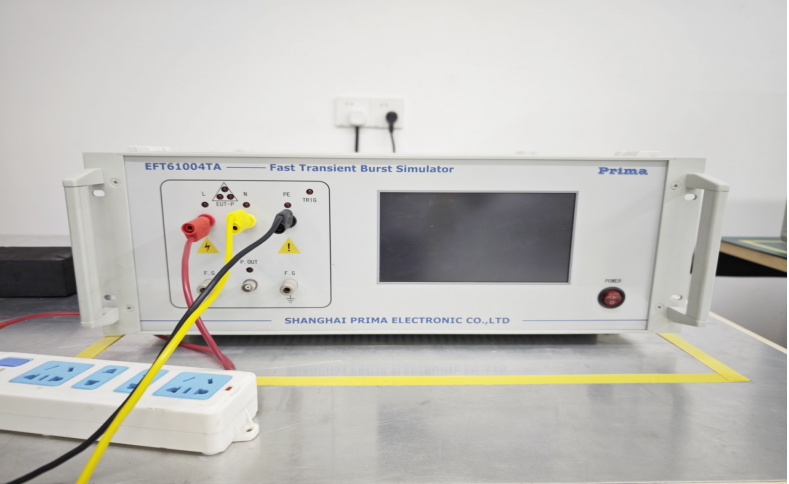
Apply the specified ESD stress at representative points, polarities, repetitions, and operating modes.
Record resets, packet errors, display faults, latch-up, leakage shifts, and permanent damage.
Repeat the highest-risk conditions with samples from another production lot.
For example, ASIM ESD3V3X004SA and ESD5X004SA are bidirectional four-channel arrays in DFN2010-5L packages. Both list 0.25 pF typical junction capacitance, while their VRWM values are 3.3 V and 5 V. Similar packaging does not make the voltage grades interchangeable. An AVL record must reference the complete code and the conditions attached to its data.
Quality follows the trail from shipment back to production
A certificate can support a quality review, but it cannot replace traceability. The sample label, shipment label, datasheet, and test report should identify the same orderable product. The lot code should connect a shipped unit to its assembly, test, package, and wafer information at the level promised by the supplier.
The buyer should test that trail with a real record. Select one shipment or sample lot and ask the manufacturer to show how it is traced. A polished template without a completed example gives little assurance that a field failure can be contained.
Change control needs equal attention. Wafer source, die revision, package material, assembly site, test limits, marking, and label format can affect electrical behavior or incoming inspection. The approval should define:
Which changes require a product change notification.
How far in advance the notice must be provided.
Which changes trigger new samples or qualification.
How last-time buys and discontinued products are handled.
Who receives an urgent quality alert.
Failure analysis terms should also be agreed before a failure occurs. Useful terms cover sample quantities, preservation of failed boards, initial response timing, destructive analysis permission, and the evidence expected in an 8D or equivalent report.
Procurement evaluates the cost of change, not just unit price
The commercial review should use a full part number and state currency, tax or Incoterm basis, package quantity, minimum order, lead time, quote validity, and supplying entity. Samples and production units should come from the same intended supply route, or the difference should be documented.
Supply continuity is easier to assess through specific questions than broad promises. Ask how the supplier confirms lead time during peak demand, how lot identity appears on delivery labels, what happens when a promised date slips, and how an end-of-life event is communicated. A realistic escalation path is more useful than a claim of permanent availability.
Procurement should also count the cost of requalification, BOM updates, line trials, certification records, and obsolete inventory. A lower unit price can be offset by an uncontrolled construction change or an unclear discontinuation process.
One material approval page keeps the three reviews aligned
Create one index page for every approved ESD diode. Link the engineering report, traceability evidence, commercial terms, owner, revision, and approval date to that exact code. The status can be separated into sample use, program-conditional approval, and full production approval. That structure lets early prototypes move forward without presenting a preliminary test as an unrestricted release.
ASIM maintains an ESD diode manufacturer hub for supplier-review and application information. A buyer can use a hub as a navigation point, but the internal AVL record should preserve the documents and revisions actually reviewed.
The final approval question is simple: can the buyer reproduce the decision months later? If the record shows the tested interface, board, sample lot, limits, supplier identity, change rules, and purchasing route, the answer is likely yes. If the record contains only a brand, a broad series name, and an ESD level, the review is unfinished.
Questions About ESD Diode AVL Approval
Does AVL approval cover every ESD diode from the manufacturer?
No. Supplier approval and part approval are separate. Each orderable device still needs an application-specific engineering and material release.
Is one successful 8 kV test enough for production approval?
No. The record must define the setup and functional criteria, check signal performance, preserve the sample lot, and repeat high-risk conditions across lots.
Which changes should an ESD diode PCN address?
The agreement should cover relevant wafer, die, package material, assembly site, test-limit, marking, and label changes, with clear notice and requalification rules.
Copyright notice:Copyright belongs to Shenzhen ASIM Electronics Co., Ltd. Please retain the author, source, and original URL when quoting or republishing.
Original URL: https://asim.com.cn/china-esd-manufacturer-avl-approval-en.html
 Previous