





 Submit


How do you design a TVS protection solution for automotive power supplies?
 2026.07.20 00:00:00
 74
74





The TVS protection scheme for automotive power supplies should be designed by comprehensively considering factors such as 12V or 24V system specifications, power supply fluctuation ranges, load dump conditions, surge test levels, the voltage tolerance of downstream components, and PCB layout. The TVS device should be placed close to the power input and integrated with the fuse, filtering, grounding, and power management circuits.
I. Challenges in Automotive Power Supply Protection
Automotive power supplies are not stable or ideal sources; they are subject to conditions such as cold cranking, reverse battery connection, load dump, inductive load kickback, and surges coupled via the wiring harness. Testing requirements vary depending on the vehicle model and the specific module.
If the TVS selection lacks sufficient design margin, testing may result in TVS failure, DC-DC converter damage, or system resets.
II. Solution Components
A typical solution includes an input fuse or current-limiting device, reverse-polarity protection, TVS clamping, common-mode/differential-mode filtering, power chip protection, and proper grounding. While TVS devices provide rapid clamping of transient overvoltages, they cannot replace all other protection components.
In high-energy scenarios, thermal design and energy distribution must be comprehensively considered.
III. Selection Method
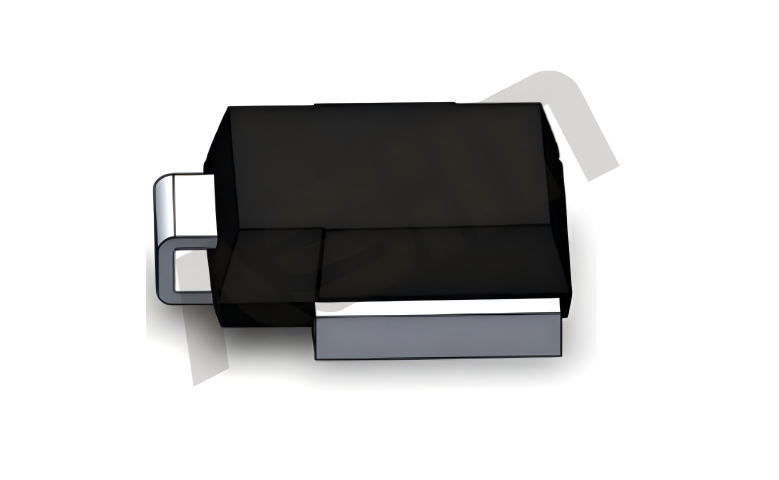
Select the VRWM based on the system's maximum operating voltage, the power rating based on the test waveform, and the clamping voltage based on the voltage tolerance of downstream components; choose the package type (SMA, SMB, SMC, SM8S, or higher-power packages) based on available installation space.
Protection for automotive power systems must avoid two extremes: the TVS triggering erroneously and disrupting normal power supply, and the clamping voltage being too high to protect downstream components.
IV. Asaim Service Capabilities
Asaim provides component selection (TVS, ESD, and EMI filtering devices) and EMC testing and rectification support for projects involving automotive central control units, cameras, T-BOXes, gateways, controllers, and more.
FAQs
Q: Can a 12V TVS be used directly in a 12V automotive system?
A: They cannot be simply equated; selection should be based on the system's maximum operating voltage and specific test conditions.
Q: Should the TVS be placed near the power input or the chip?
A: Placing it near the power input is generally more effective for dissipating surge energy early on.
Q: Is a TVS alone sufficient for an automotive power supply?
A: In most cases, it needs to be combined with a fuse, reverse-polarity protection, filtering, and proper grounding.
 Previous

Related News

2024.10.12
EMC testing Contents and Current Situation of Automotive Electronic products
2025.02.21
How to choose the best circuit protection devices in a circuit?
2026.07.08
What is the difference between SMA and SMB packaged TVS diodes?
2026.07.11
How is the ESD0524 series used for USB interfaces?
2026.07.13
How do I select a 5V low-capacitance ESD diode model?
2026.07.15
For what applications are SOD-323 packaged ESD diodes suitable?
2026.07.16
How do I select the package for a TVS diode used with a 24V power supply?
2026.07.17
How do you choose between SMA, SMB, and SMC packaged TVS diodes?
2026.07.20
How should a failure in the CAN communication surge test be handled?
2026.07.20
For which automotive applications is the SM8S series TVS suitable?


