





 Submit


For what applications are SOD-323 packaged ESD diodes suitable?
 2026.07.15 00:00:00
 71
71





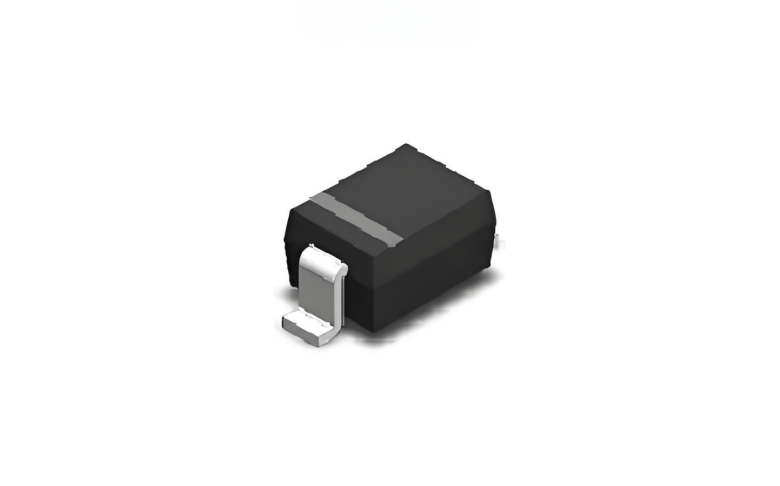
ESD diodes in the SOD-323 package are suitable for protecting general signal lines, low-speed interfaces, certain auxiliary power lines, and interfaces where board space is moderate. Compared to compact DFN packages, they are easier to identify and solder during manufacturing; compared to TVS packages like SMA and SMB, they are better suited for small-signal protection, though they are not designed to withstand high-energy surges.
I. Characteristics of SOD-323
SOD-323 is a common small-form-factor surface-mount diode package suitable for small-to-medium-sized PCBs and general interface protection. It strikes a balance between package robustness, ease of manufacturing, and PCB space efficiency.
Compared to smaller packages like DFN0603 and DFN1006, SOD-323 is easier to inspect visually and repair; compared to packages like SMA and SMB, it is better suited for small-signal ESD protection.
II. Application Scenarios
SOD-323 packaged ESD protection devices are commonly used for keypads, audio interfaces, SIM cards, TF cards, I2C and UART lines, low-speed sensors, general control signals, and certain auxiliary power lines. For high-speed differential lines such as USB 3.0, HDMI, and MIPI, it is crucial to verify that the junction capacitance meets the specific requirements.
If the interface is exposed to high surge energy, the SOD-323 package may lack sufficient power handling capability; in such cases, SMA, SMB, or SMC packages—or higher-power TVS devices—should be considered.
III. Selection Considerations
When selecting a device, consider parameters such as VRWM, VBR, VC, IPP, CJ, and package dimensions. For standard low-speed signals, models with higher protection capabilities are suitable, whereas low-capacitance models should be prioritized for high-speed signals.
The device should be placed close to the interface, and the GND discharge path should be short. Even with a suitable package, improper layout can compromise protection effectiveness.
IV. Asaim Supply Capabilities
Asaim’s ESD products cover a wide range of packages, including SOD-323, SOD-523, DFN, and SOT; suitable models can be recommended based on customer interface types, space constraints, and testing standards.
FAQ
Q: Can SOD-323 be used for high-speed interfaces?
A: It can be evaluated, but you must verify whether the junction capacitance and parasitic parameters meet the requirements for high-speed signals.
Q: Can SOD-323 replace TVS diodes for power supply surge protection?
A: This is not recommended; power supply surge protection typically requires packages with higher power ratings.
Q: For which standard interfaces is SOD-323 suitable?
A: It is suitable for applications such as buttons, audio, SIM cards, TF cards, and low-speed control lines.
 Previous

Related News

2024.10.12
EMC testing Contents and Current Situation of Automotive Electronic products
2025.09.06
TVS Diode Failure Mode Analysis: Design Guide for Protection Differences between Short Circuit and Open Circuit -ASIM
2025.09.09
Analysis of Misunderstandings in TVS Tube Clamping Voltage Selection and Calculation -ASIM
2025.09.12
How to effectively dissipate heat and solve the problem of severe heating of MOSFETs? - Shenzhen ASIM
2025.12.18
ESD Diode Failure Analysis: Surge Tolerance and Short Circuit Risk-ASIM
2026.06.22
TVS Diode VRWM, VBR, and VC: Parameter Relationship Guide
2026.06.22
ESD Diode vs TVS Diode: Which to Use and When
2026.07.10
What is the difference between SMD TVS and leaded (through-hole) TVS?
2026.07.11
How do you design an ESD protection scheme for USB interfaces?
2026.07.15
What should be done if signal abnormalities occur after adding ESD protection to a MIPI interface?


