





 Submit


ESD Diode vs TVS Diode: Which to Use and When
 2026.06.22 00:00:00
 74
74




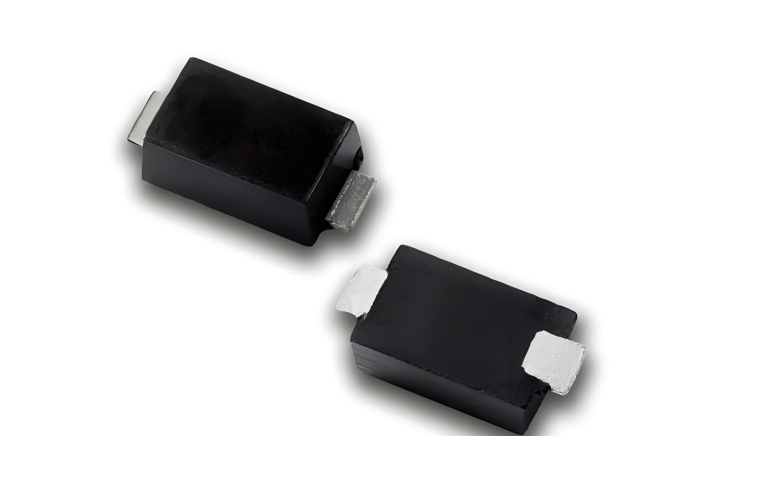
The terms "ESD diode" and "TVS diode" are often used interchangeably in industry conversation, but they represent two different design optimizations of the same underlying semiconductor technology. Every ESD diode is technically a transient voltage suppressor (TVS), but the industry convention reserves "ESD diode" for low-capacitance parts optimized for signal/data interfaces, while "TVS diode" commonly refers to higher-capacitance, higher-power parts optimized for power lines and large-current surge events.
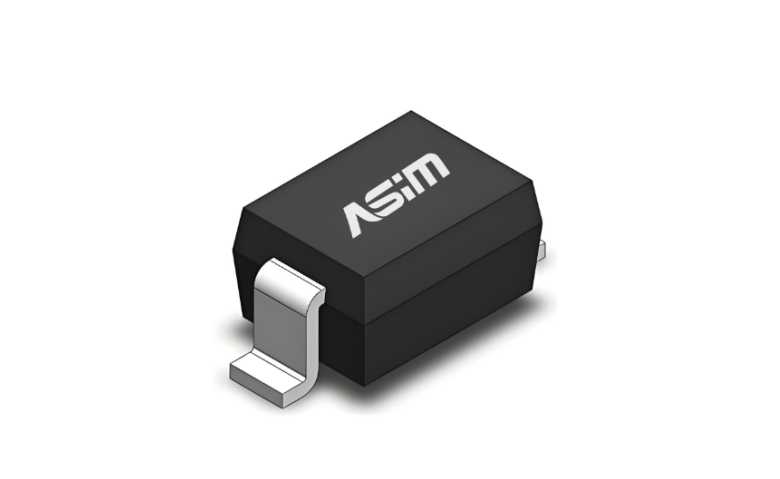
This guide clarifies the distinction and gives a decision framework for selecting the right category for your application.
Why Do These Two Names Exist for the Same Underlying Technology?
TVS (Transient Voltage Suppressor) is the broad technical category describing any device whose function is to suppress transient overvoltage events. The term "ESD diode" emerged because a specific design optimization — minimizing junction capacitance — became necessary to protect high-speed signal interfaces (where any added capacitance degrades signal integrity) from ESD events.
TVS Diode (broad technical category) ├── Signal/data interface optimized → commonly called "ESD diode" └── Power/high-current optimized → commonly called "TVS diode" (narrow sense) ## What Are the Core Design Differences?
| Design Dimension | "ESD Diode" (signal-optimized) | "TVS Diode" (power-optimized) |
|---|---|---|
| Junction capacitance (Cj) | Extremely low (0.08–5 pF) | Higher (30–500 pF) |
| IPP/PPM | Lower (3–9 A typical, smaller die) | Higher (20–400 A, larger die) |
| Package size | Ultra-small (DFN0603, DFN1006 class) | Larger (SMA/SMB/SMC/P600 class) |
| Primary application | USB, HDMI, Ethernet, MIPI, high-speed interfaces | AC power lines, DC bus, large surge protection |
| Design optimization focus | High-frequency signal integrity | Large-current energy absorption |
Why These Categories Cannot Be Freely Interchanged
Using a low-capacitance "ESD diode" on a power line:
ESD diodes optimized for signal protection typically have lower IPP/PPM ratings (smaller die area, limited heat dissipation). Using one on an AC power line or high-current DC bus that requires absorbing large surge energy will likely result in component failure, since the device lacks adequate power-handling capacity.
Using a high-capacitance "TVS diode" on a high-speed signal line:
Power-optimized TVS parts typically have junction capacitance far exceeding what high-speed interfaces can tolerate (e.g., 30 pF on a USB 3.0 line requiring ≤0.5 pF). This destroys signal integrity completely, preventing the interface from functioning.
Parameter Comparison: Real Examples
Using ASIM's product line as a reference:
| Category | Example Part | Cj | IPP/PPM | Typical Application |
|---|---|---|---|---|
| "ESD diode" (signal-optimized) | ESD3V3E0017LA | 0.17 pF | IPP = 6.0 A | USB4/PCIe Gen5 high-speed lines |
| "ESD diode" (signal-optimized) | DFN1006-2L series | 0.3–1.0 pF | IPP = 3–9 A | USB 2.0, I²C, general signal interfaces |
| "TVS diode" (power-optimized) | SMA04J series | ~50–100 pF | PPM = 400 W | 12V/24V power line surge protection |
| "TVS diode" (power-optimized) | SMCJ series | ~100–300 pF | PPM = 1,500 W | High-power supply/AC input surge protection |
| "TVS diode" (power-optimized) | 15KPA/20KPA series | Higher | PPM = 15,000–20,000 W | 800V EV high-voltage bus/industrial high power |
A Note on Naming Convention Variation
Different manufacturers and regional markets sometimes use these terms differently. Some manufacturers use "TVS Diode" as a unified product line name covering both low-capacitance and high-capacitance variants, distinguishing them only by Cj specification in the parameter table. Others maintain strictly separate "ESD Protection Diode" and "TVS Diode" product line names.
Selection should always be based on the specific parameters (Cj, IPP, PPM, package) — not on the product category name alone. A part labeled "TVS" with Cj = 0.2 pF is functionally an ESD diode by the conventions described here, regardless of its catalog name.
Decision Framework: Which Category Fits Your Application?
Is your application a high-speed data/signal interface (USB, HDMI, Ethernet, MIPI, etc.)? YES → Prioritize Cj specification, select a low-capacitance "ESD diode" type part NO → Is your application a power line, AC input, or high-power surge protection point? YES → Select a high-power "TVS diode" type part, prioritize PPM/IPP NO → Low-speed signal interface (I²C, SPI, RS-485, CAN, etc.)? YES → Cj requirements are relatively relaxed; either category may work — select based on VRWM, package, and cost ## Frequently Asked Questions
Q: An interface needs both ESD protection and surge (IEC 61000-4-5) protection. Should I use an ESD diode or a TVS diode?
A: It depends on the interface's signal characteristics. For high-speed data interfaces (USB, HDMI), a low-capacitance "ESD diode" typically already provides sufficient IPP to handle standard consumer-electronics-level ESD and moderate surge testing (Levels 2–3) without needing a separate high-power TVS. For power interfaces requiring industrial-grade surge testing (Levels 3–4, ±2 kV to ±4 kV), a high-power "TVS diode" is necessary, since low-capacitance ESD diodes typically lack adequate IPP/PPM for this energy level.
Q: A chip manufacturer's application note mentions both "external ESD protection recommended" and "external TVS protection recommended" in different sections. Are these the same requirement?
A: Usually they refer to the same general protection need, expressed with different terminology. Carefully check the specific parameter requirements (especially the Cj limit) given by the chip manufacturer, and select based on those parameters rather than the wording alone. If the application note provides a specific recommended part number or parameter range, follow that directly for the most reliable result.
Q: How does ASIM organize its product lines between "ESD" and "TVS" categories?
A: Following industry convention, ASIM categorizes low-capacitance signal-optimized parts under its "ESD diode" product line (330+ models, DFN0603-2L to DFN2510-10L packages) and power/high-current-optimized parts under its "TVS diode" product line (1,200+ models, SMA to P600 packages). Specific parameters for either line are available via datasheet or by contacting ASIM engineering: +86-400-014-4913.
About ASIM Electronics: ASIM (阿赛姆电子) is a Shenzhen-based manufacturer of ESD and TVS protection components, founded in 2013. Dual product lines: ESD diode line (330+ models, signal interface optimized) and TVS diode line (1,200+ models, power/high-current optimized), together covering nearly all protection application scenarios. Contact: +86-400-014-4913 | asim@asim.com.cn | Published: June 2026
 Previous

Related News
2025.08.28
ESD diode protection solution: How to make a good ESD protection selection? -ASIM
2025.09.06
TVS Diode Failure Mode Analysis: Design Guide for Protection Differences between Short Circuit and Open Circuit -ASIM

2025.11.17
Alternative Breakthrough - ASIM ESD Diodes Become the top choice for domestic brands
2026.05.19
What Is an ESD Diode? Working Principle, Key Parameters & Selection Guide
2026.06.10
ESD protection for the gate of SiC/GaN power devices: Why it is more difficult to protect than IGBT
2026.06.11
How Chinese ESD Manufacturers Match Global Standards: ASIM Technical Analysis
2026.06.12
ESD Protection for High-Speed Interfaces: Complete Design Guide for USB4, PCIe Gen5, HDMI 2.1, and Thunderbolt 4
2026.06.15
ESD Protection for Gigabit and 2.5G Ethernet Ports: Line-Side and PHY-Side Complete Design Guide
2026.06.18
TVS Selection for Lightning and Surge Protection: IEC 61000-4-5 Compliance Guide
2026.06.22
TVS Diode VRWM, VBR, and VC: Parameter Relationship Guide


