





 Submit


Are SM8S series TVS diodes suitable for automotive power supplies?
 2026.07.08 00:00:00
 81
81




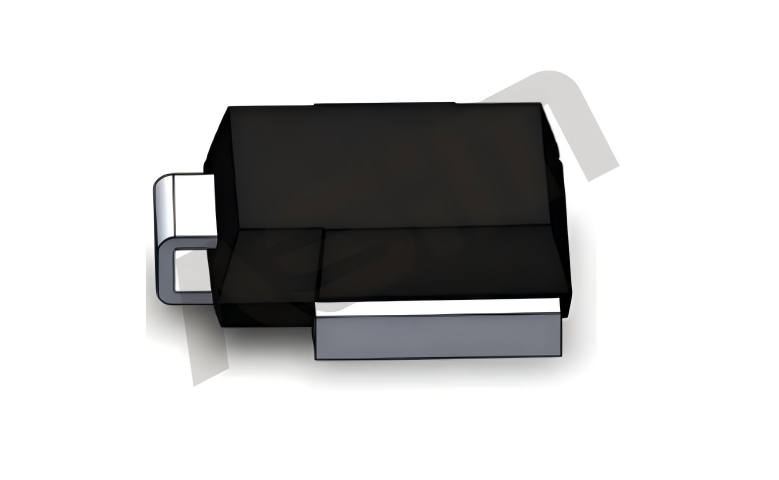
The SM8S series TVS diodes are suitable for automotive power supply and high-energy surge protection applications. Common use cases include 12V/24V automotive power inputs, DC-DC converter inputs, body control modules (BCM), telematics boxes (T-BOX), camera and display power supplies, and external wiring harness connections. Suitability for a specific project should be determined by comprehensively evaluating factors such as operating voltage, load dump test levels, clamping voltage, power margin, and thermal dissipation conditions.
I. Product Positioning of the SM8S Series
The SM8S series consists of high-power surface-mount TVS packages designed for high-energy transient suppression. The Asaim SM8S/DO-218AB series encompasses high-power TVS products—including both unidirectional and bidirectional models—suitable for protection applications requiring higher energy ratings than those handled by SMA, SMB, or SMC packages.
Automotive power supply environments are subject to risks such as motor start/stop events, inductive load switching, wiring harness coupling, reverse polarity, transient surges, and load dump. Standard small-package TVS devices often lack sufficient headroom, necessitating the use of higher-power-rated TVS devices at the power supply input.
II. Reference for Key Parameters of the SM8S Series
| Model Examples | VRWM | VBR Min | IPP | VC Max | Encapsulation |
|---|---|---|---|---|---|
| SM6S24V / SM6S24B | 24V | 26.7V | 170A | 38.9V | SM8S/DO-218AB |
| SM6S33V / SM6S33B | 33V | 36.7V | 124A | 53.3V | SM8S/DO-218AB |
| SM6S36V / SM6S36B | 36V | 40.0V | 114A | 58.1V | SM8S/DO-218AB |
| SM6S43V / SM6S43B | 43V | 47.8V | 95.1A | 69.4V | SM8S/DO-218AB |
| SM6S58V | 58V | 64.4V | 70.5A | 93.6V | SM8S/DO-218AB |
| SM6S85V | 85V | 94.4V | 48.2A | 137V | SM8S/DO-218AB |
Note: The above parameters are compiled based on Asaim's existing product data; for actual applications, please refer to the latest version of the specifications and test conditions for the specific model.
III. Suitable Automotive Locations
Vehicle Power Input: Used at the module's external power input to suppress high-energy transients introduced via wiring harnesses.
DC-DC Converter Input: Used to protect power conversion chips and upstream filtering circuits, reducing the risk of high-voltage spikes propagating to downstream systems.
Body Control and Gateway Modules: Characterized by numerous external wiring harnesses and complex power environments; suitable for high-power TVS applications.
Power Supplies for Automotive Cameras, T-BOX Units, and Displays: Surge protection margins require careful evaluation when power lines run through long harnesses or are routed near inductive loads.
IV. How to Select the SM8S Model
First, determine the system's maximum operating voltage. For a 12V system, selection should not be based solely on the nominal 12V rating; instead, one must account for the maximum continuous voltage under conditions such as alternator operation, battery status, cold cranking, charging, and transient events. Similarly, a 24V system requires an adequate safety margin.
Second, verify the testing standards and pulse levels. Automotive projects often involve ISO 7637, ISO 16750, or customer-defined test conditions; since different pulses vary in energy and duration, the power requirements for the TVS device differ significantly.
Third, ensure that the clamping voltage remains below the withstand limit of the downstream circuitry. A TVS device does not clamp the voltage down to the nominal operating voltage; rather, it limits the voltage to an acceptable peak level during a surge event.
Fourth, consider thermal design and copper area. High-power TVS devices require sufficient copper area to facilitate heat dissipation, as the PCB layout directly impacts the device's actual performance during testing.
V. Precautions for Automotive Power Supply Usage
The SM8S cannot resolve all automotive power supply issues on its own. The actual power input stage typically requires additional components and design considerations, such as a fuse, reverse-polarity protection, common-mode/differential-mode filtering, electrolytic and ceramic capacitors, and a proper grounding scheme.
If the TVS is damaged, downstream chips fail, or the system resets during testing, it is necessary to examine the TVS selection, PCB discharge path, upstream impedance, grounding method, and test waveforms. Where necessary, waveform re-testing and verification of corrective measures should be conducted at an EMC laboratory.
VI. Frequently Asked Questions
Q: Is the SM8S suitable for 12V automotive systems?
A: It is suitable for high-energy surge protection applications; however, the specific model must be selected based on the maximum operating voltage, testing standards, and the voltage withstand rating of downstream components.
Q: Can the SM8S be used in 24V automotive systems?
A: It can be evaluated for use in 24V systems, but the appropriate VRWM model must be selected and verified against load dump requirements and specific customer test conditions.
Q: Can the SM8S replace all power supply protection components?
A: No. It primarily serves the function of transient voltage suppression; it still requires integration with fuses, filtering, reverse-polarity protection, and proper PCB layout.
 Previous

Related News
2025.09.08
High-frequency Circuit TVS Diode Junction Capacitance Optimization Strategy -ASIM
2025.09.10
The Function and Working Principle of MOSFETs -ASIM
2026.05.19
What Is an ESD Diode? Working Principle, Key Parameters & Selection Guide
2026.06.11
ESD Protection for High-Speed Automotive Interfaces
2026.06.11
How Chinese ESD Manufacturers Match Global Standards: ASIM Technical Analysis
2026.06.12
ESD Protection for High-Speed Interfaces: Complete Design Guide for USB4, PCIe Gen5, HDMI 2.1, and Thunderbolt 4
2026.06.13
Common Mode Inductor Selection for Wi-Fi Routers and Home Networking Equipment
2026.06.18
ESD Protection for HDMI and DisplayPort Interfaces: 4K/8K Video Connector Design Guide
2026.06.22
TVS Diode VRWM, VBR, and VC: Parameter Relationship Guide
2026.06.22
ESD Diode vs TVS Diode: Which to Use and When


