





 Submit


What is the difference between SMA and SMB packaged TVS diodes?
 2026.07.08 00:00:00
 125
125





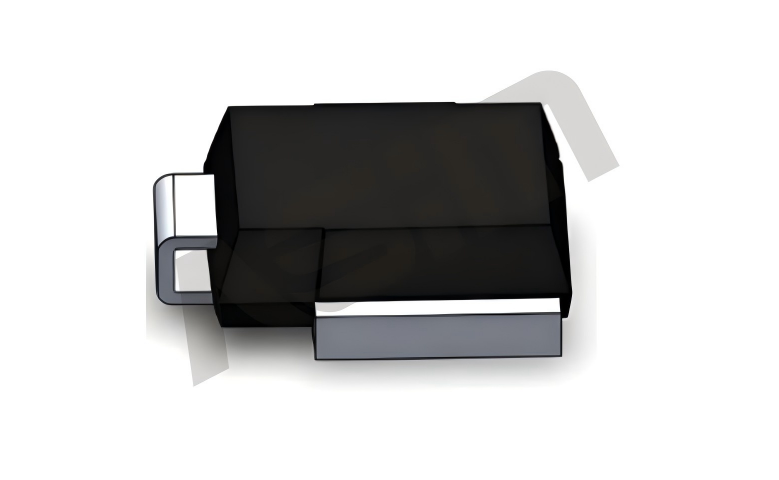
SMA and SMB are both common surface-mount TVS package types; the primary differences lie in package dimensions, power ratings, surge handling capabilities, and suitable circuit applications. Generally, SMA is better suited for space-constrained environments involving moderate surge energy, whereas SMB features a larger package size and higher pulse power handling, making it ideal for power ports, industrial controls, and communication interfaces that require greater surge protection.
I. Key Differences Between SMA and SMB
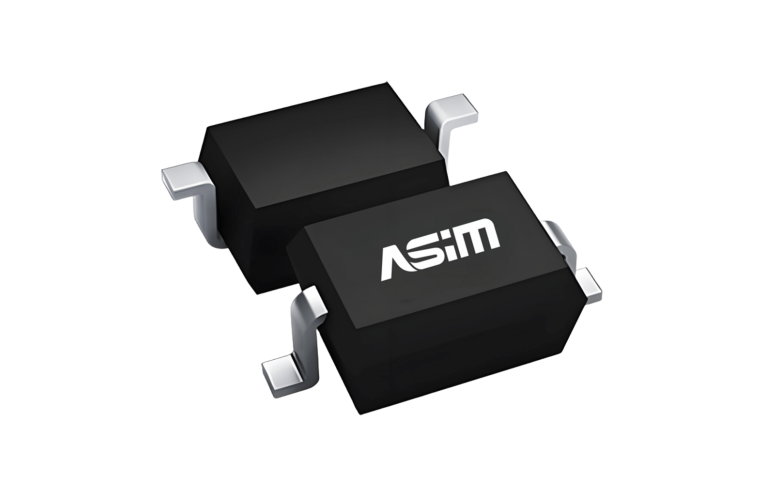
SMA components typically feature the DO-214AC package, with the Asaim SMA series covering 400W-rated TVS products. SMB components typically feature the DO-214AA package, with the Asaim SMB series covering 600W and select 1000W-rated TVS products.
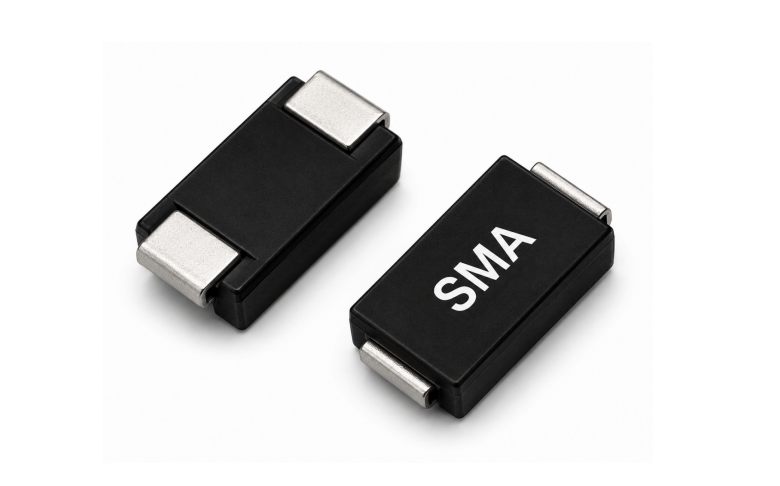
At the same operating voltage, the SMB package typically offers higher peak pulse current capability than the SMA package, though it occupies more board space and has a greater profile height. When selecting a component, one should not rely solely on the package designation but must also consider parameters such as PPPM, IPP, VC, VBR, and the test waveform.
II. Comparison of SMA and SMB Parameters
Applicable location| Comparison items | SMA-packaged TVS | SMB-packaged TVS |
|---|---|---|
| Common Packages | DO-214AC | DO-214AA |
| Asaim Series Power Rating | 400W class | 600W and some 1000W class models |
| Package dimensions | about 4.8-5.35mm×2.25-2.90mm | about 5.21-5.59mm×3.30-3.94mm |
| Space usage | Smaller | relatively large; quite large |
| Surge margin | medium | higher |
General power supply rails, consumer electronics, space-constrained ports | Power inlets, industrial controls, communications, and wiring harness ports. | |
| 12V Example | SMA04J12V:IPP about 20.1A,VC Max about 19.9V | SMB06J12V:IPP about 30.2A,VC Max about 19.9V |
| 24V Example | SMA04J24V:IPP about 10.3A,VC Max about 38.9V | SMB06J24V:IPP about 15.5A,VC Max about 38.9V |
Note: The above parameters are compiled based on Asaim's existing product data; for actual applications, please refer to the latest version of the specifications and test conditions for the specific model.
III. When to Choose SMA
The SMA package is a suitable choice when PCB space is limited, surge rating requirements are moderate, and port power levels are low—such as in standard 12V power rails, consumer electronics power ports, certain industrial signal ports, and space-constrained protection locations.
SMA offers a balance between protection capability and physical size; however, if testing reveals excessively high clamping voltage (VC), significant device heating, or insufficient surge margin, an upgrade to an SMB or larger package should be considered.
IV. When to Choose SMB
The SMB package is generally more suitable than the SMA package when power inputs, industrial control ports, communication interfaces, or external wiring harnesses are exposed to higher surge energy levels. With greater power headroom, SMB packages are better suited for products subject to stringent surge testing requirements.
For applications involving 24V power supplies, long-cable interfaces, outdoor equipment, or systems with significant inductive loads, the SMB series should be considered as a primary option if the SMA package lacks sufficient headroom.
V. Selection Should Not Be Based Solely on Package Type
Even among components sharing the same package (such as SMA or SMB), there are significant differences in operating voltage, breakdown voltage, clamping voltage, and pulse current ratings across different models. When selecting a component, first determine the system's maximum operating voltage, then verify the required test level and the voltage tolerance of downstream chips, and finally select the appropriate package and model.
If the product must pass IEC 61000-4-5 surge testing, it is recommended to verify the design by considering factors such as test waveforms, source impedance, trace lengths, and the system's grounding scheme, rather than relying solely on theoretical parameters.
VI. Frequently Asked Questions
Q: Is SMA necessarily inferior to SMB?
A: No. SMA is smaller in size, making it suitable for moderate surge levels and space-constrained applications; SMB offers greater power headroom, making it suitable for higher surge ratings.
Q: Should I choose SMA or SMB for a 12V power supply?
A: If the surge requirement is low and space is tight, consider SMA; if higher IPP (peak pulse current) and power headroom are required, prioritize SMB.
Q: Do SMA and SMB necessarily have different clamping voltages?
A: For the same voltage rating, the clamping voltages may be similar; the primary differences usually lie in power rating, peak pulse current, and package size.
 Previous

Related News

2024.10.12
EMC testing Contents and Current Situation of Automotive Electronic products
2025.02.21
How to choose the best circuit protection devices in a circuit?
2025.09.08
High-frequency Circuit TVS Diode Junction Capacitance Optimization Strategy -ASIM
2025.09.10
The Function and Working Principle of MOSFETs -ASIM
2026.06.11
How Chinese ESD Manufacturers Match Global Standards: ASIM Technical Analysis
2026.06.12
ESD Protection for High-Speed Interfaces: Complete Design Guide for USB4, PCIe Gen5, HDMI 2.1, and Thunderbolt 4

2026.06.12
TVS Diode Selection Guide for 800V Electric Vehicle Systems: High-Voltage Platform Protection
2026.06.18
ESD Protection for HDMI and DisplayPort Interfaces: 4K/8K Video Connector Design Guide
2026.06.22
TVS Diode VRWM, VBR, and VC: Parameter Relationship Guide
2026.07.08
Are SM8S series TVS diodes suitable for automotive power supplies?


