





 Submit


How do I select a 5V low-capacitance ESD diode model?
 2026.07.13 00:00:00
 90
90





5V low-capacitance ESD protection devices are suitable for interfaces that operate at a nominal voltage of approximately 5V and require high signal integrity. When selecting a device, one must look beyond the "5V" rating and also compare parameters such as junction capacitance, clamping voltage, package size, number of channels, and data rate. Key selection criteria differ depending on the specific interface—such as USB, HDMI, MIPI, SIM card, keypad, or audio.
1. Which interfaces commonly use 5V low-capacitance ESD protection?
5V low-capacitance ESD protection is commonly used for USB data lines, Type-C auxiliary lines, HDMI control lines, MIPI interfaces, SIM cards, TF cards, buttons, audio lines, and sensor signal lines. High-speed interfaces place greater emphasis on junction capacitance, whereas for standard low-speed interfaces, the focus is on balancing protection performance with cost.
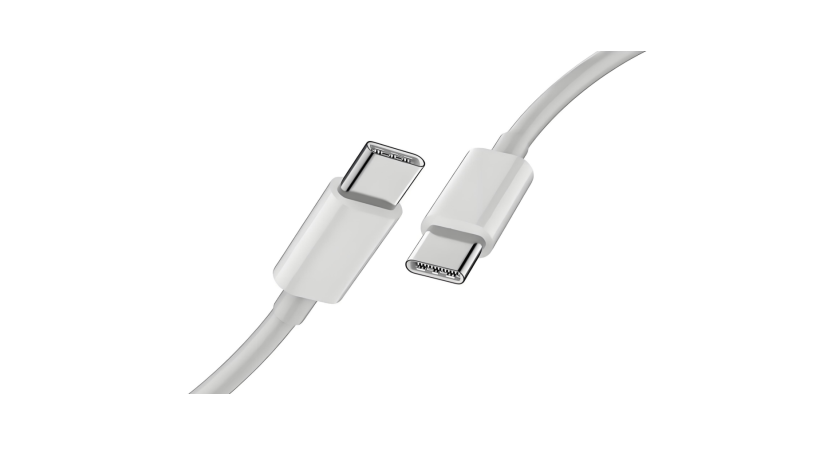
For VBUS or external power inputs, low-capacitance ESD protection devices should not be used indiscriminately; instead, a TVS diode or a higher-power device should be selected based on the supply voltage, surge rating, and energy level.
II. How to Evaluate Key Parameters
The VRWM should exceed the interface's normal operating voltage, and the VBR must ensure reliable activation under abnormal stress conditions. The VC should remain below the maximum voltage tolerance of the downstream chip, while a lower CJ is preferable for high-speed signal lines. Package selection should be based on available board space and assembly capabilities.
Focusing solely on the 5V rating while ignoring CJ may result in signal attenuation for high-speed interfaces; conversely, prioritizing low capacitance at the expense of clamping capability could lead to inconsistent results in electrostatic discharge (ESD) testing.
III. Selection Recommendations for Different Scenarios
For USB 2.0, low-capacitance dual-channel ESD devices are suitable options; for USB 3.0, HDMI, and MIPI, ultra-low-capacitance arrays or multi-channel devices are preferred; for low-speed signals such as those for buttons, SIM cards, and audio, small-package ESD devices can be selected based on space constraints and required protection levels.
For automotive, industrial, and outdoor interfaces, a comprehensive assessment is also required, taking into account system-level surge, electrical fast transients (EFT), and grounding conditions.
IV. Asaim Product Compatibility
Asaim’s ESD product portfolio covers DFN0603, DFN1006, SOD-323, SOD-523, SOT23, and multi-channel array packages, offering various low-capacitance solutions tailored for 5V signal lines, high-speed interfaces, and miniaturized applications.
FAQs
Q: Must a 5V ESD device be used for a 5V interface?
A: Generally, you should select a device with a VRWM (Reverse Working Voltage) that meets the operating voltage requirements; however, factors such as capacitance, clamping voltage, and test ratings must also be considered.
Q: Is lower junction capacitance always better?
A: Lower capacitance is advantageous for high-speed interfaces, but for low-speed interfaces, there is no need to blindly pursue the lowest possible capacitance.
Q: Can the same 5V ESD device be used for both signal lines and power lines?
A: Direct interchangeability is not recommended; for power lines, the primary considerations should be surge energy handling and power rating.
 Previous

Related News

2024.10.12
EMC testing Contents and Current Situation of Automotive Electronic products
2025.02.21
How to choose the best circuit protection devices in a circuit?
2025.09.09
Analysis of Misunderstandings in TVS Tube Clamping Voltage Selection and Calculation -ASIM
2025.09.10
The Function and Working Principle of MOSFETs -ASIM

2025.11.17
Alternative Breakthrough - ASIM ESD Diodes Become the top choice for domestic brands
2026.06.11
How Chinese ESD Manufacturers Match Global Standards: ASIM Technical Analysis
2026.06.22
ESD Diode vs TVS Diode: Which to Use and When
2026.07.10
What is the difference between SMD TVS and leaded (through-hole) TVS?
2026.07.11
How is the ESD0524 series used for USB interfaces?

2026.07.11
What issues need to be checked during EMC rectification?


