Submit





A Shenzhen location can shorten sample delivery, board review, and retesting. It does not qualify a TVS diode. The manufacturer still needs to connect sustained voltage, transient waveform, source impedance, protected-load limit, package current path, documentation, and production traceability to the specific industrial-power or automotive project.
Local response has value after the application is defined
Shenzhen and the surrounding manufacturing region support power supplies, communications equipment, vehicles, and contract manufacturing. A nearby TVS supplier may deliver samples quickly or review a board in person. That speed matters only when the first request contains enough application information to prevent a generic voltage-based recommendation.
For an industrial supply, provide nominal voltage, tolerance, no-load state, startup, regenerative energy, field wiring, and allowed faults. For an automotive module, identify the electrical platform, customer transient definitions, source conditions, functional states, and required component and submission documents. Both projects need ambient and operating temperature, downstream voltage limit, package space, current entry, return path, and recovery criterion.
Prepare the following before a manufacturer meeting:
all sustained operating and allowed abnormal voltage states;
transient waveform, source impedance, polarity, repetition, and temperature;
downstream absolute and functional voltage boundaries;
schematic and PCB area from the connector to the protected circuit;
sample, pilot, volume, documentation, and timing requirements.
A reply based only on “24 V system” has skipped the information that separates two 24 V designs.
An industrial 24 V rail begins with the sustained window
Industrial rails may rise above the nominal label during no-load operation, startup, long-cable events, inductive switching, or regenerative conditions. Reverse working voltage should keep the TVS off throughout the accepted sustained range. Maximum clamping voltage at the relevant pulse, plus PCB parasitic overshoot, must remain compatible with the protected load.
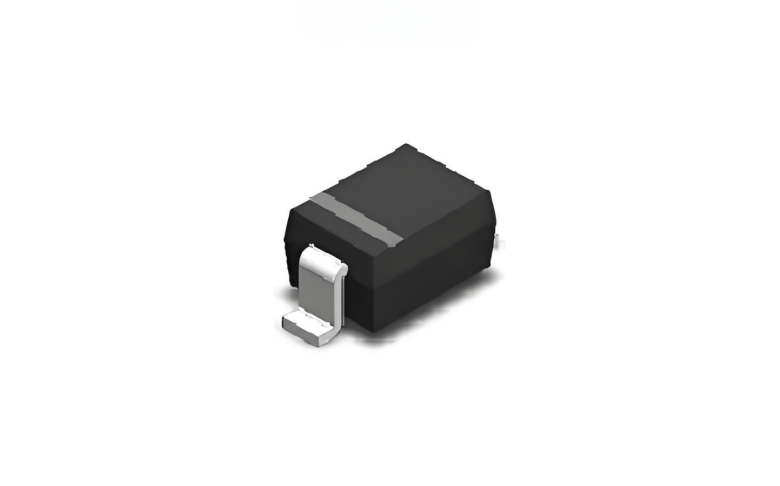
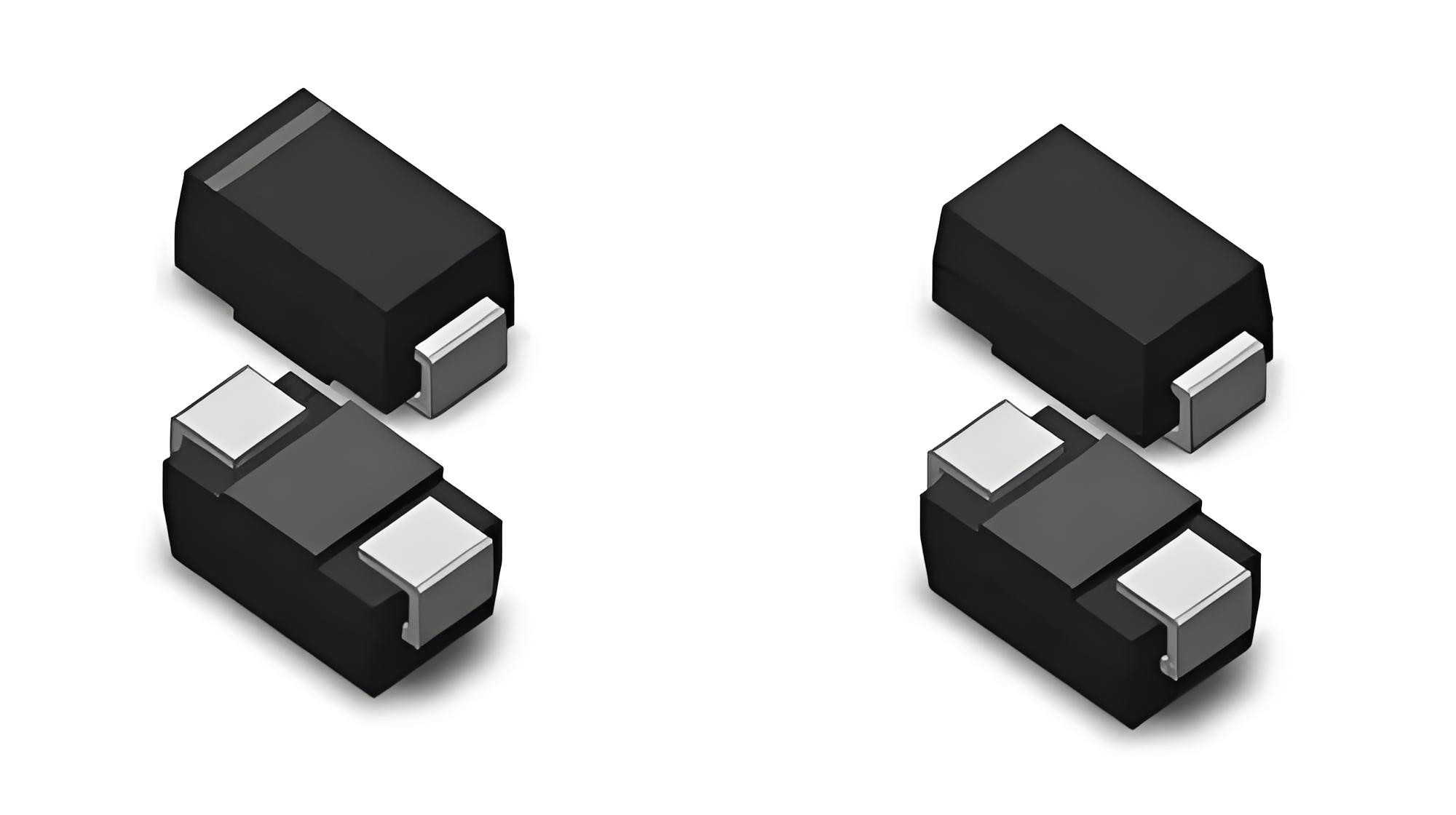
ASIM SMA04J24V can be read as a candidate example. It uses an SMA/DO-214AC package, lists 24 V reverse working voltage, and has a 26.7 to 29.5 V breakdown range. Under specified conditions, the part lists 10.3 A peak pulse current, 38.9 V maximum clamping voltage, and 400 W peak pulse power. These values define a comparison point; they do not approve every circuit carrying a 24 V label.
Use a board-based industrial review:
Measure the complete sustained voltage window at tolerance and boundary states.
Identify whether the event enters through a terminal, cable, supply module, or inductive load.
Compare the real or required waveform with the datasheet’s current and pulse conditions.
Probe the TVS terminals and the protected node with a controlled reference.
Reduce the high-current path from entry to TVS and from TVS to the chosen return.
Inspect leakage, temperature, output function, and damage after repeated stress.
Automotive review adds platform and document boundaries
“Automotive grade” should refer to a complete order code and its applicable evidence, not a marketing prefix. The project needs to verify component qualification documents, temperature classification, traceability, change control, and customer submission requirements. The module still faces its own transient, harness, ground, operating-state, and functional tests.
| Review area | Industrial power project | Automotive project |
|---|---|---|
| Sustained state | Supply tolerance, no load, regeneration, and accepted faults | Platform operating range, charging state, and specified abnormalities |
| Transient | Field cable, inductive load, source impedance, required waveform | Customer-defined pulses, source conditions, repetition, and functional class |
| Documentation | Specification, lot identity, customer or safety list | Full-code qualification evidence, traceability, submission, and change control |
| Functional check | Output, leakage, thermal state, reset or shutdown | Module function, diagnostics, communication, and post-stress state |
Component qualification supports part selection. It does not replace system validation. A document must also match the exact suffix being quoted and delivered.
Use proximity to run controlled comparisons
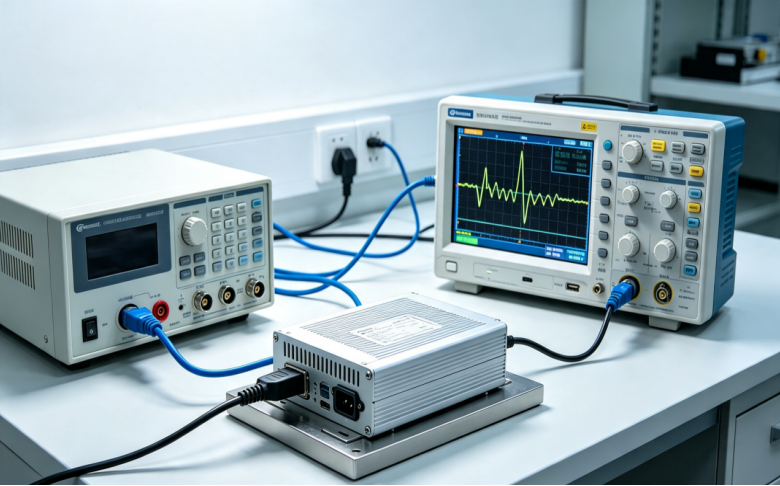
Local engineering can make A/B/A testing faster. Preserve the original configuration A. Create B by changing one TVS or one path. Restore A after the comparison. Keep the supply, load, harness, software, probe, pulse point, polarity, interval, and test order fixed.
If B improves but restored A also remains good, examine solder rework, cable movement, environmental drift, sample damage, and recovery time. A nearby supplier can help repeat the experiment quickly; proximity does not remove the need for the control.
ASIM is based in Shenzhen and can discuss TVS candidates, board current paths, and remediation experiments. The customer provides the target board, waveform, and functional criterion. The released result comes from the production-form board, enclosure, cable, software, and operating state.
Convert local sampling into a durable supply record
Same-day samples do not establish volume continuity. Record the full order code, specification revision, sample lot, second lot, board revision, test result, reel orientation, supply entity, normal lead time, and change contact. State whether inventory is shared, reserved, or subject to availability.
The ASIM TVS diode manufacturer hub is the stable destination for manufacturer, product, and application information. This Shenzhen article answers a different question: how local support serves industrial and automotive qualification without merging their evidence requirements.
Distance can reduce shipping and meeting time. A disciplined application definition and repeatable record reduce the engineering risk that remains after the samples arrive.
Questions about Shenzhen TVS manufacturers
Does a local Shenzhen manufacturer guarantee faster failure analysis?
Local access shortens material and communication movement. Analysis speed still depends on a reproducible setup, engineering ownership, sample preservation, and lot traceability.
Can an industrial 24 V TVS be copied into a 24 V automotive design?
No. Sustained states, transient waveforms, source impedances, temperature, functional criteria, qualification documents, and customer submissions may differ.
Does component qualification approve the complete automotive module?
No. Confirm that evidence matches the full TVS code, then complete the module’s electrical, functional, supply, and customer-specific validation.
Copyright notice:Copyright belongs to Shenzhen ASIM Electronics Co., Ltd. Please retain the author, source, and original URL when quoting or republishing.
Original URL: https://asim.com.cn/shenzhen-tvs-diode-manufacturer-review-en.html
 Previous