





 Submit


How do you design a surge protection solution for industrial power supplies?
 2026.07.16 00:00:00
 80
80





Surge protection solutions for industrial power supplies should be designed based on input voltage, cable length, load type, test levels, and grounding conditions. Common measures include upstream fuses or current-limiting devices, TVS diodes or varistors, common-mode and differential-mode filtering, proper grounding, and PCB energy dissipation paths.
I. Sources of Industrial Power Surges: Why "Small Components" Cannot Withstand High Energy
Industrial environments contain various sources of interference, such as long cables, relays, motors, solenoid valves, lightning-induced surges, and power switching events. According to the national standard GB/T 17626.5-2008, surge voltages in industrial environments (Installation Category III/IV) can reach 2 kV to 4 kV, with transient energy potentially entering the equipment via power lines, ground lines, or communication lines.
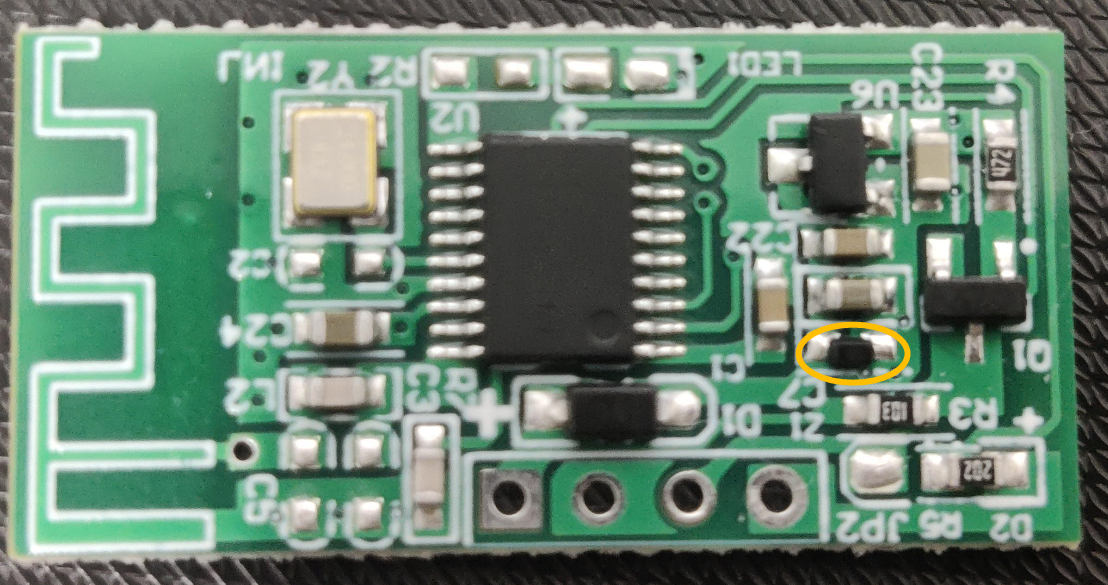
Relying solely on low-power protection components near the chip (such as standard small-package ESD devices) is typically insufficient to withstand the high-energy surges present at the entry point. In a surge test case involving a 4G PCB, Asym (阿赛姆) noted that while the original TVS remained undamaged, the downstream circuitry malfunctioned; the failure was attributed to the TVS's excessive +40V clamping voltage during the surge test, which damaged the downstream components. The company emphasized that the TVS should be positioned close to the interface—protection at the entry point is critical, whereas small on-board components serve only as a secondary, supplementary measure.
II. Protection Scheme Components: Tiered Protection and Layout Specifications
Components such as fuses, varistors, TVS diodes, gas discharge tubes (GDTs), common-mode chokes, and differential-mode filters can be configured at the input interface based on requirements. The document *Port Design (Continuously Updated)* by Asem provides clear guidelines:
DC Power Interface: TVS diodes are typically used for surge protection. EMC design for the power input section should follow the "protection before filtering" principle; first-stage protection components (such as TVS diodes) must be placed upstream of filtering components to prevent the latter from being damaged by surges, while second-stage protection can be placed downstream of the filtering stage.
AC Power Interface: Common-mode chokes and capacitors form the filtering circuit, while varistors and discharge tubes constitute the surge protection circuit. Since the failure mode of a varistor is a short circuit, a fuse must be included and positioned close to the interface.
In low-voltage DC systems, TVS devices are commonly used for rapid clamping (semiconductor TVS devices offer response times in the picosecond range; see *Components for ESD Protection*) to suppress transient overvoltage on power lines.
Layout Rules (based on layout recommendations and remediation case studies for devices such as the ESD0524PA):
Protection devices should be placed close to the power entry point (or connector) to limit transient coupling;
Minimize the path length between the TVS and the line being protected;
Keep the transient return path (to ground) as short as possible to reduce parasitic inductance;
Ensure energy discharge paths are short and wide, and prevent surge currents from passing through sensitive signal areas; utilize multiple ground vias when using multi-layer PCBs.
III. Key Points for TVS Selection: Parameter Matching Over Sole Reliance on Voltage Ratings
Select the VRWM (reverse standoff voltage) based on the system's maximum operating voltage; choose the peak pulse power rating according to the test waveform (e.g., 1.2/50μs, 8/20μs, 10/1000μs, or automotive load dump per ISO 7637) and required performance level; determine the clamping voltage (VC) based on the voltage withstand capability of downstream components; and select the package type based on available mounting space.
Asaim's products cover a wide range of packages and power ratings, such as:
| Package type | Asaem Signature Series | Peak Pulse Power (10/1000μs) | Applicable Scenarios |
|---|---|---|---|
| SMA (DO-214AC) | SMA04J series | 400W | Space-constrained, low-surge industrial power supply |
| SMB (DO-214AA) | SMB06J series | 600W | Moderate margin, industrial control equipment |
| SMC (DO-214AB) | SMC15JxxxC | 1500W | High-energy, automotive-grade applications |
| DO-218AB | SM8S66J series | 6600W | Demanding Automotive/Industrial Power Supply Inputs |
| P600 | P600 series | 5000W | High-power industrial equipment |
| DO-214AB | 15KPxxxC series | 15000W | Extreme surges, automotive load dump |
For industrial power supplies operating at 24V or 48V, special attention must be paid to the voltage fluctuation range to prevent the TVS from conducting erroneously during normal operation. For instance, since a 24V system may experience normal fluctuations reaching 30V, it is advisable to select components with a VRWM of at least 30V (such as the SM8S66J33B—33V breakdown voltage, 6600W—or the 0K6P33V—33V, 600W). Additionally, the clamping voltage (VC) must remain below the withstand voltage of downstream chips; in a surge remediation project for "Apple-style" connectors, this was achieved by placing a suitable TVS/ESD device in parallel along the main circuit path, enabling the system to withstand 30V/80V 8/20μs surges.
The selection criteria draw upon Asym's rectification experience: "When selecting clamping-type surge protection devices, factors such as peak pulse power, current-handling capacity, and clamping voltage must all be considered. Generally, the higher the current-handling capacity and the lower the clamping voltage, the better the performance."
IV. ASIM Support: Fully Encapsulated TVS and EMC Remediation
ASIM offers TVS devices and surge protection components in various packages and power ratings, along with EMC remediation recommendations suitable for applications such as industrial controls, power modules, communication equipment, and security systems. Backed by a professional EMC laboratory, we provide comprehensive technical solutions covering everything from component selection to board-level layout.
FAQ
Q: Is a TVS diode sufficient for industrial power supply surge protection?
A: Not necessarily. High-energy scenarios may require a combination of fuses, varistors, filtering, and grounding. For example, AC power ports typically require a varistor, a gas discharge tube (GDT), and a fuse; DC ports often require a combination of a TVS diode and a common-mode choke (protection followed by filtering).
Q: Where should the TVS diode be placed?
A: Generally, it should be placed close to the power input to minimize the path for surges to enter the board. Layout guidelines explicitly require that "protection devices be placed near input terminals or connectors" and that the ground return path be as short as possible.
Q: Does a failed surge test always require upgrading to a higher-power TVS diode?
A: Not necessarily; the failure could also be caused by an excessively high clamping voltage, inadequate grounding, or excessively long PCB traces. For instance, a 4G board issue was resolved by switching to a TVS diode with a lower clamping voltage (ESD5B350TA) rather than simply increasing power; similarly, a game controller charging dock passed the ±180V test by selecting the ESD24F501TRP, which offered the appropriate clamping voltage (Vc).
 Previous

Related News

2024.10.12
EMC testing Contents and Current Situation of Automotive Electronic products
2025.02.21
How to choose the best circuit protection devices in a circuit?
2025.09.09
Analysis of Misunderstandings in TVS Tube Clamping Voltage Selection and Calculation -ASIM
2025.09.10
The Function and Working Principle of MOSFETs -ASIM
2026.05.19
What Is an ESD Diode? Working Principle, Key Parameters & Selection Guide
2026.06.10
ESD protection for the gate of SiC/GaN power devices: Why it is more difficult to protect than IGBT

2026.06.12
TVS Diode Selection Guide for 800V Electric Vehicle Systems: High-Voltage Platform Protection
2026.06.18
TVS Selection for Lightning and Surge Protection: IEC 61000-4-5 Compliance Guide
2026.07.11
How is the ESD0524 series used for USB interfaces?
2026.07.15
For what applications are SOD-323 packaged ESD diodes suitable?


